
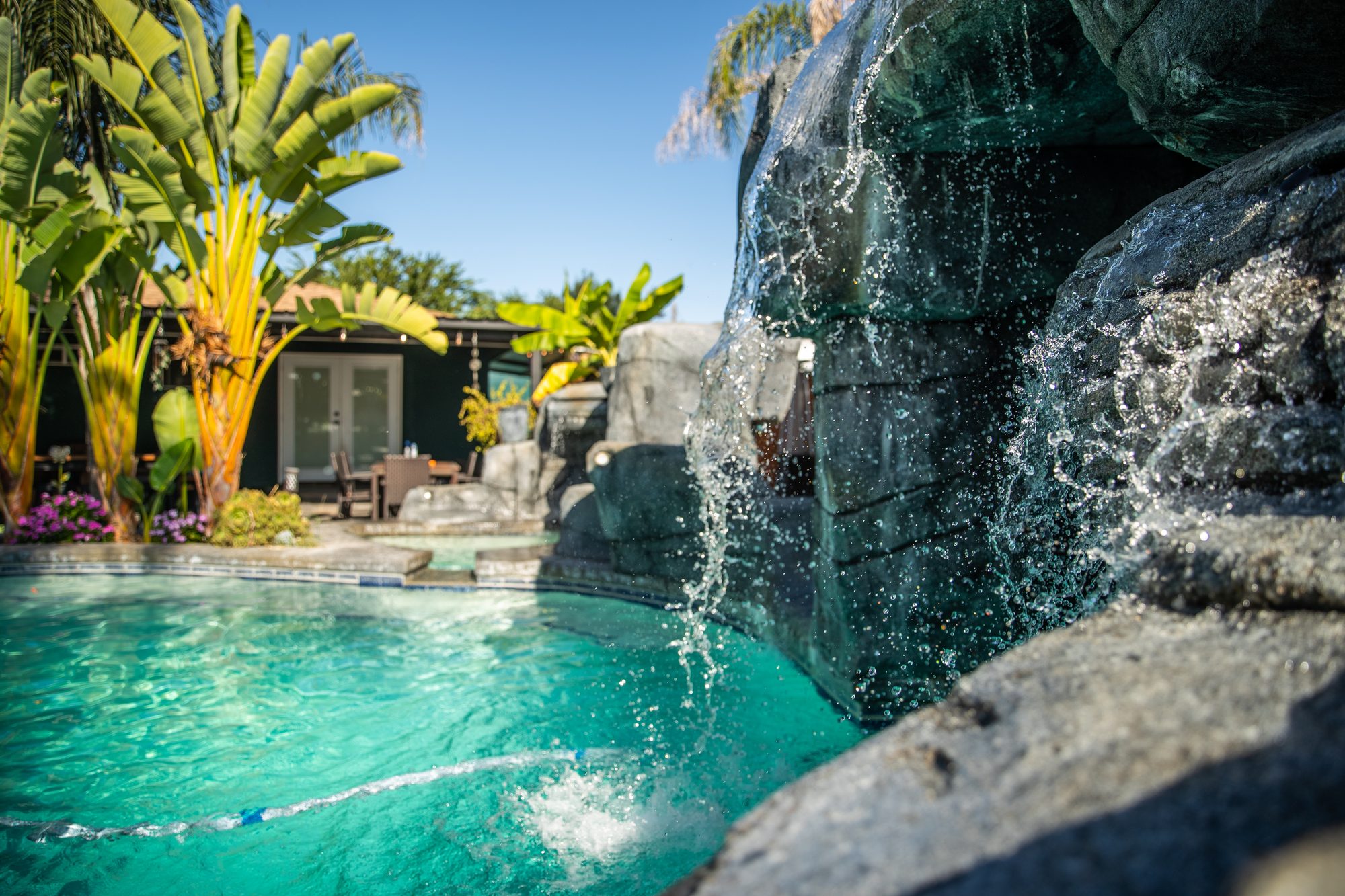
Types of Pools: Fiberglass, Concrete and Vinyl Liner
How the three types of inground pools are built, what wears out on each, and how to pick one for your yard.
There are three main types of pools for your yard: fiberglass, concrete and vinyl liner. Fiberglass is a one-piece shell set by crane. Concrete, often called gunite, is built in place from steel and sprayed concrete. A vinyl liner pool has a wall with a vinyl sheet inside. Each fits a different yard, schedule and budget.
This guide is written by Morgan Litchfield, who owns Neighborhood Pool Service in Hanford, California (CSLB #1139527). Morgan has worked in the pool trade since 2006. Call or text him at (559) 544-2345. We install Latham fiberglass and Radiant vinyl liner pools. Custom gunite is quoted on request. So this page tells you plainly what each type is and where each one fits. Last updated November 16, 2026.
Types of inground pools side by side
| Fiberglass | Concrete (gunite) | Vinyl liner | |
|---|---|---|---|
| How it is built | A one-piece shell molded at a factory and set by crane | Steel and sprayed concrete, built in place | A wall with a vinyl liner sheet inside. Radiant’s walls are insulated aluminum panels |
| Time to swim | 2–4 weeks after the permit on our installs | 8–12 weeks is normal | About one week for our above-ground Radiant package. Semi-inground and inground include digging and take longer |
| Shapes | 47 California-built models, fixed shapes. Largest 16'×40', deepest 8' | Anything you can draw | Radiant comes in six standard shapes: Emerald, Freeform, Oval, Radiant Grecian, Rectangle and Round |
| Surface | Gelcoat, a non-porous finish | Plaster or pebble | A vinyl liner |
| What wears out | The gelcoat is never replastered | Plaster or pebble is resurfaced every 10–15 years | The liner. Latham says about once every 10 years, and more than 15 years with good care |
| Where it can go | Yards where a crane can reach the hole | Almost any yard | Radiant says above ground, semi-inground, into a hill or fully inground |
| Warranty | Latham limited lifetime structural shell warranty | Set by the builder. Ask for it in writing | Radiant states a lifetime warranty against manufacturing defects. The liner is covered separately, on its own limited terms |
| Who it fits | A stock shape that fits, a crane path, and a wish to swim this season | A custom shape, a very large or deep pool, or a site a crane cannot serve | A sloped yard, a yard with no crane path, or an owner who wants an above-ground or semi-inground pool |
Sources: our own install times and the 10–15 year replaster interval as printed on our fiberglass vs. gunite guide; Latham Pool Products, Radiant page and vinyl liner FAQ (lathampool.com, read November 11, 2026); Radiant Pools, radiantpools.com/pools (read November 11, 2026).
What is a fiberglass pool?
A fiberglass pool is a one-piece shell molded in a factory. A truck brings it to your house and a crane sets it in a hole we dug for it. The inside is gelcoat, a smooth, non-porous finish. Then the crew adds plumbing, equipment and decking.
Every shell we install is molded at Latham’s Williams, California plant, and Latham backs each one with a limited lifetime structural warranty. Most of our installs swim 2–4 weeks after the permit. The gelcoat is never replastered. The limit is access. The shell cannot be built in place, so it has to fly over the house or come down the side yard. See all 47 California-built fiberglass models, or read the fiberglass pool page. For what a pool costs, the California pool cost guide has the numbers.
What is a concrete pool? (gunite and shotcrete)
A concrete pool is built in place. Crews tie a steel cage in the hole, then spray concrete over it. There are two ways to spray it, gunite and shotcrete. Gunite is a dry mix until it is applied. Shotcrete is wet concrete. Many people call any concrete pool a gunite pool.
River Pools (updated March 11, 2025) says concrete pools can be built with either process. Because the pool is formed by hand, you can draw almost any shape and go as large or as deep as you want. The trade is time and upkeep. Eight to twelve weeks is normal for a Central Valley build, and the plaster or pebble surface is resurfaced about every 10–15 years. Custom gunite is quoted on request. For the full comparison, read fiberglass vs. gunite in the Central Valley.
What is a vinyl liner pool?
A vinyl liner pool is a pool with a wall and a sheet of vinyl that holds the water. The liner is the surface you see and touch. It is made to fit the pool and is replaced when it wears out. The wall can be built several ways.
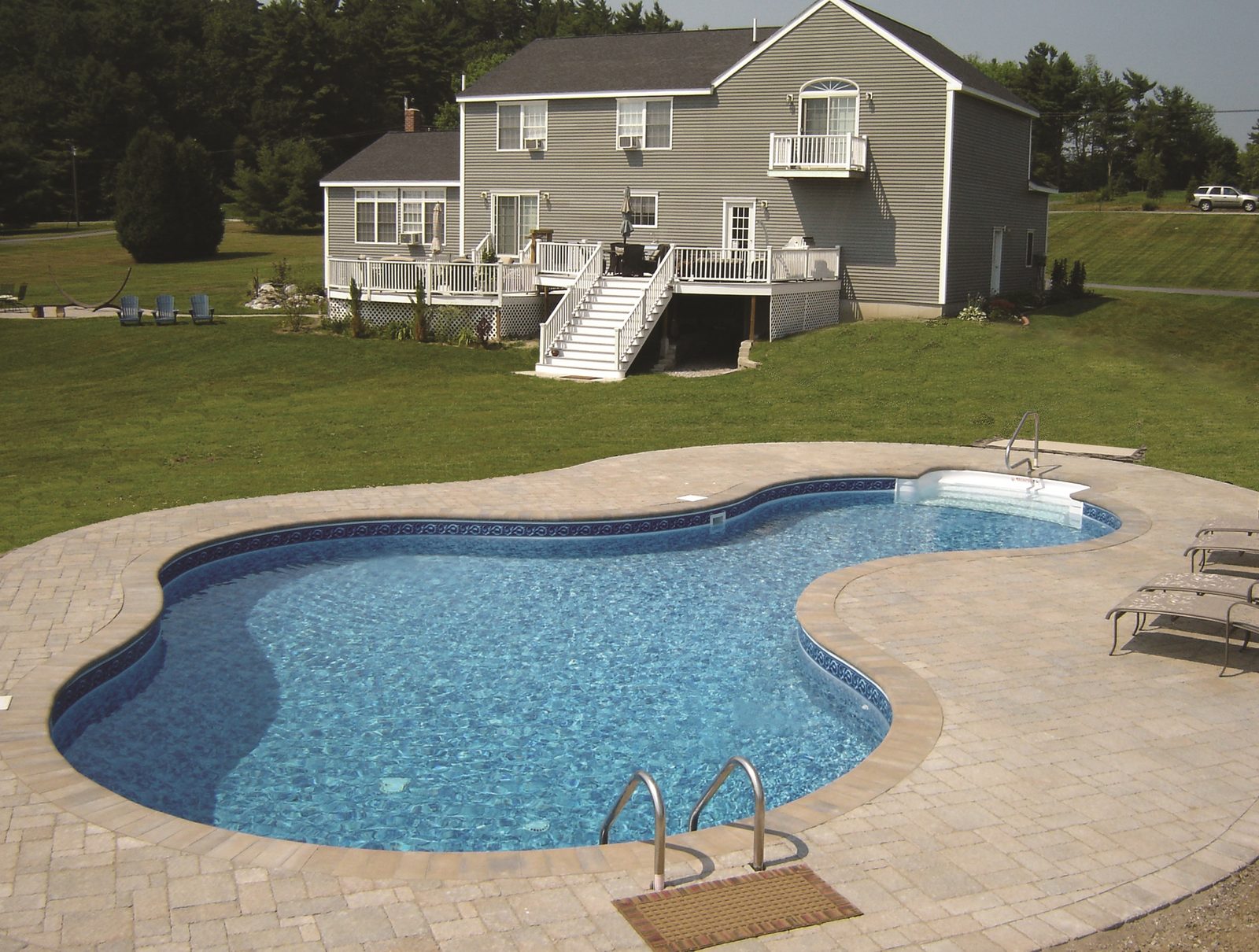
A Radiant inground vinyl liner pool. Photo: Radiant Pools.
We install the Radiant line. A Radiant pool has insulated aluminum wall panels, made in the U.S. and rated R-10 by Latham. Latham acquired Radiant in 2021. Radiant says its pools can be installed above ground, semi-inground, into a hill or fully inground, in wall heights of 42, 48 and 52 inches.
Radiant says its pools carry a “100% lifetime, fully transferable, non-prorated warranty against manufacturing defects” (radiantpools.com, read November 11, 2026). Radiant’s warranty page says the vinyl liner is covered separately, on its own limited terms, so ask to see the liner terms in writing. Latham says a liner is replaced about once every 10 years, and one can last more than 15 years with good care. For details, see our Radiant pools page.
Above ground vs. semi-inground vs. inground
These words describe how deep the pool sits in the yard, not what it is made of.
- Above ground. The pool sits on top of the ground, on a prepared site.
- Semi-inground. The pool is dug in part of the way. The top of the wall stands above the yard. Latham says this suits uneven ground.
- Inground. The top of the pool is level with the yard. Fiberglass, concrete and vinyl liner can all be built this way.
Fiberglass shells and concrete pools are built inground. The Radiant line is the one we install that can also go above ground or semi-inground. Every in-ground pool is a permitted, inspected project. For the others, the permit depends on the size, the height and your city or county. We check the rules for your address before we write an estimate. See how the permit process works here.
Which type of pool fits a Central Valley yard?
Do not start with the material. Start with four questions about your yard and your plans.
- Can a crane reach the hole? A fiberglass shell needs a path over the house or down the side yard. If there is none, concrete or vinyl liner is the better fit.
- Does a stock shape fit? If one of our fiberglass models does, that is usually the shorter project. If you want a shape no mold makes, or a pool bigger than 16'×40', that is a concrete pool.
- Is your yard sloped? A Radiant vinyl liner pool can be installed into a hill or semi-inground. We look at the grade before we pick.
- When do you want to swim, and for how long will you own the pool? A fiberglass install is 2–4 weeks. Concrete is 8–12. A gelcoat is never replastered, and a liner is a part you will replace someday.
The Central Valley adds two facts. The valley floor has hardpan layers that can slow any dig, and a 105-degree July stretches the calendar on concrete that has to cure. None of that rules out any type. It is why we walk the yard before we quote. We install fiberglass and Radiant vinyl liner pools, and we will tell you plainly if a concrete pool is the right answer for your yard.
Questions about types of pools
What are the main types of inground pools?
Is a gunite pool a concrete pool?
Is a fiberglass pool better than a vinyl liner pool?
How long does each type of pool take to build?
Do I need a permit for a pool?
What is a Radiant pool?
Which type of pool lasts the longest?
Sources
- Neighborhood Pool Service LLC: fiberglass 2–4 weeks, gunite 8–12 weeks and replaster every 10–15 years, from our own fiberglass vs. gunite guide.
- River Pools and Spas, “Gunite vs. Shotcrete” (updated March 11, 2025).
- Latham Pool Products, Radiant vinyl liner pools page and vinyl liner FAQ, lathampool.com (read November 11, 2026).
- Radiant Pools, radiantpools.com/pools and the Radiant lifetime warranty page (read November 11, 2026).
- Latham Group, press release on the Radiant acquisition (November 30, 2021).
Not sure which type fits?
The fastest way to decide is a free walk of your yard. We measure the access, check the grade and the soil, and tell you plainly which type fits. Then you get a written, itemized estimate. That costs you nothing.
Neighborhood Pool Service LLC — CSLB #1139527 (C-53 Swimming Pool, C-61/D-35) — Hanford, CA. Owner: Morgan Litchfield.